

Exploring Ethical Standards in Clinical Research
Adhering to ethical standards in clinical trials is mutually beneficial for both researchers and participants. Throughout a clinical trial, research teams are attempting to gather as much information as possible. The goal is to understand everything they can about the drug or therapy they are testing. This includes what works, what doesn’t work, potential side effects and more. As a result, participation can sometimes feel quite risky.
This is why upholding ethical standards benefits participants as well. These standards help protect participants by keeping their health, rights and dignity in the forefront as they volunteer in a clinical trial. Ensuring participant protections can also enhance public confidence in medical advancements as well, which builds trust in the research process itself.
Beyond benefiting participants and the general public, clinical trial ethics also helps ensure data integrity. The guidelines in place are there to make sure researchers are inputting accurate and unbiased data results. Not only does this help paint the most clear picture about how a study is doing, this is another way to build trust amongst the public for the validity of clinical trials.
Core Ethical Principles in Clinical Trials
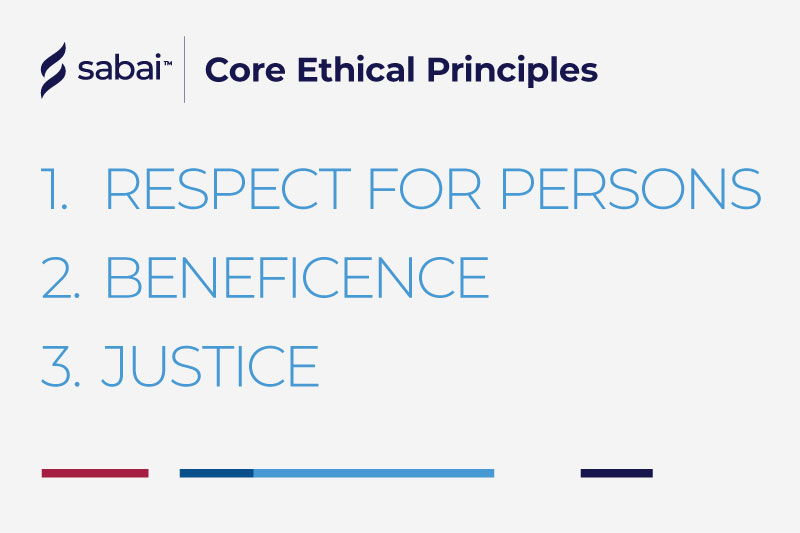
Core ethical principles can be traced back to 1974, when the Belmont Report was created. Created after and in response to the Tuskegee Syphilis Study, this report includes three ethical principles to guide human research.
- Respect for persons: Treating participants as individuals who are capable of making their own decisions. This includes providing an informed consent process prior to the study, and protecting those who may have trouble making decisions on their own.
- Beneficence: Ensuring researchers are doing good and avoiding harm. Participants’ well-being during a study should be of utmost importance.
- Justice: This guarantees everyone who wants to take part in a research study has an equal chance to, and that study benefits and drawbacks are communicated clearly throughout the study.
Ethical Guidelines and Frameworks
There are various regulatory bodies in place to protect ethical standards in research, such as the Food and Drug Administration (FDA) or European Medicines Agency (EMA). However, there are other frameworks in clinical research for teams to abide by as it relates to their study.
Declaration of Helsinki
Adopted by the World Medical Association in 1964, the Declaration of Helsinki was developed in response to World War II reports indicating physicians were conducting unethical medical research. The declaration is a statement of ethical principles for the medical research community to follow as they conduct human subjects research. Since 1964, the Declaration of Helsinki has been amended seven times, with most recent amendments made in October 2024
Good Clinical Practice (GCP)
Used as a set of guidelines to safeguard patients while ensuring reliable trial results and data integrity, good clinical practice (GCP) was established in 1996 by the International Council of Harmonisation (ICH). GCP guidelines outline responsibilities for many aspects of clinical research, including:
- Institutional review boards (IRBs)
- Investigators
- Sponsors and monitors involved in informed consent
- Staff training
- Data management systems
- Continuous monitoring and auditing
- Quality control
IRBs
The mission of an IRB is to keep human subject protections at the forefront of every study they review. The IRB review process includes study submission, study review, suggesting revisions or giving approval and ongoing monitoring. Review boards need to uphold ethical and safety standards so participant protections are in place at all times during a trial.
Key Ethical Challenges in Clinical Trials
While there are plenty of safeguards in place and frameworks guiding researchers to conduct ethically sound research, there are still challenges they have to navigate occasionally.
For example, many research teams and studies work with vulnerable populations – think children, the elderly or other instances of individuals with limited autonomy. This group may have limited capacity for decision-making, they may be more susceptible to coercion or they may have a higher risk for adverse effects from the treatment.
Another obstacle is using a placebo in a study. Especially when there are effective treatments available for participants to use as researchers compare against new treatment options, that can raise a flag on whether or not a placebo is actually appropriate to use.
Additionally, research teams have a responsibility to give access to trial results, and ensure data has not been manipulated or falsified. This ensures participants know exactly how a trial went, and that the results they are reading are honest and accurate so they can make the best decisions for them with the information they were presented.
Ethical Violations in Clinical Trials: Real-life Examples
Unfortunately, there are several examples to use that highlight ethical violations and the importance of upholding standards in trials. Perhaps one of the most famous is the Tuskegee Syphilis Study.
Conducted between 1932 and 1972, the Tuskegee Syphilis Study was originally intended to observe “the natural history of untreated syphilis.” However, during the study, researchers did not conduct any routine informed consent from the participants. Additionally, they were denied treatment for the four decades this study spanned, even after there were options that could have been available to them.
It’s examples like these that serve as a reminder of the importance of taking ethical standards seriously in clinical research. Ultimately, these set of standards are in place to protect not only research teams, but more importantly, participants.
Trust Sabai With Upholding Your Ethical Standards
Our mission at Sabai is to protect the rights, safety and welfare of human research participants as they take part in research. Our patient-first approach is top of mind as we review recruitment methods and materials. As a central IRB, we know the necessary ethical considerations when it comes to reviewing research, and we work to make sure researchers are staying compliant and ethical. Partner with us to strengthen your trial and protect your participants every step of the way.