

Under Pressure: How a Responsive IRB Partner Lightens the Load on Research Sites
Every site knows the feeling
In 1981, Queen and David Bowie released “Under Pressure,” a song built on one of the most recognizable bass lines in rock history. More than four decades later, its title still sums up a feeling most people know well.
Research sites know it better than most.
Coordinators juggle several studies at once. Investigators balance research with patient care. Sponsors want sites activated yesterday, and enrollment targets rarely wait for anyone. Every delay lands on the same small group of people.
An institutional review board (IRB) can add to that pressure or relieve it. A slow IRB turnaround time, unclear requests and unanswered emails all pile onto an already full workload. A responsive IRB partner takes some of that weight off.
Where the pressure comes from
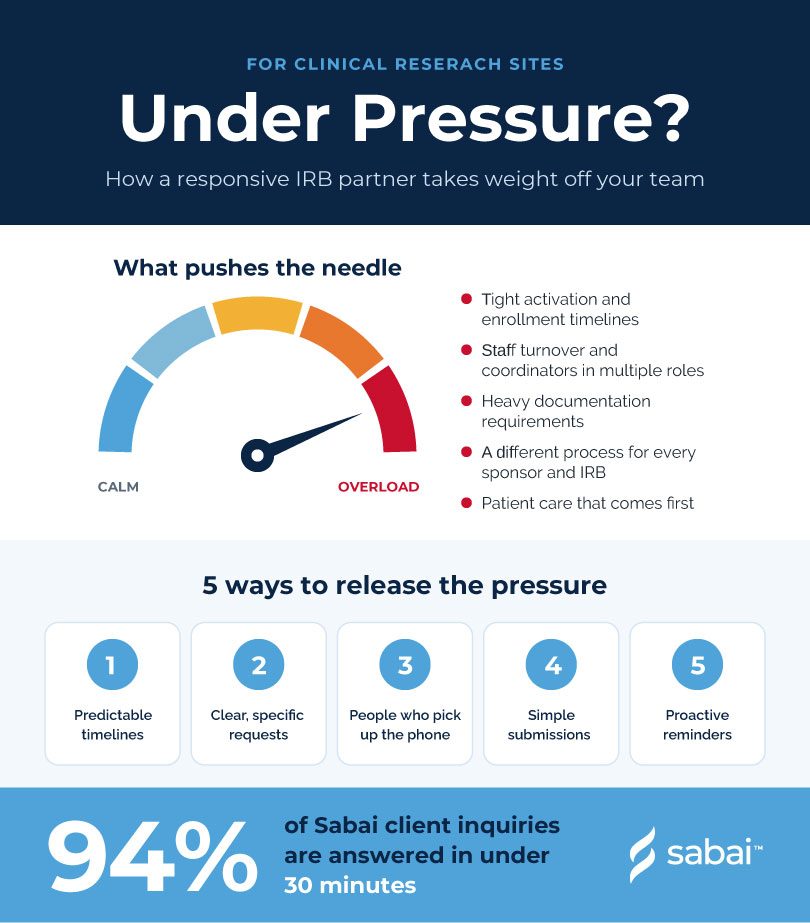
Site teams carry a long list of competing demands. Common sources of stress include:
- Aggressive study activation and enrollment timelines
- Staff turnover and coordinators covering multiple roles
- Detailed documentation and regulatory requirements
- Different processes and portals for every sponsor and IRB
- Patient care responsibilities that come first
None of these pressures goes away on its own. Sites can control some of them. Others depend on the partners they work with, and the IRB is one of the most important.
How IRB friction adds to the load
IRB review protects participants, and that work takes care and time. Process problems are another matter. When the review process itself is hard to work with, the cost shows up at the site.
Site teams often run into:
- Unpredictable review timelines that make planning difficult
- Vague requests for changes that lead to several rounds of revisions
- Questions that go unanswered for days
- Approved amendments that sit waiting while the study stalls
- Continuing review deadlines that arrive with little warning
Each issue may seem small. Together, they pull coordinators away from participants and push studies off schedule. A missed continuing review deadline can also lead to a lapse in approval, which creates problems for participants, sites and sponsors alike.
What a responsive IRB partner looks like
Responsiveness means removing friction from the review process. In practice, that comes down to a few habits.
Predictable timelines
Sites plan better when they know what to expect. Clear review schedules and realistic turnaround times let coordinators and sponsors build accurate activation plans and avoid last-minute scrambles.
Clear, specific requests
When an IRB needs changes, it should say exactly what is needed and why. Specific feedback cuts down on back-and-forth and helps sites get submissions right the first time.
People who pick up the phone
Sometimes a quick conversation saves a week of emails. Sites benefit from IRB staff who answer questions promptly and explain requirements in plain language.
Simple submissions
A well-designed portal makes it easier to submit documents, track status and find approval letters. Less time spent on administrative work means more time for participants.
Proactive reminders
A good IRB partner helps sites stay ahead of continuing review and other deadlines. Advance notice prevents lapses and keeps studies running without interruption.
Speed without shortcuts
Relieving pressure should never come at the expense of participant protection. A responsive IRB still reviews every study with full attention to risk, consent and participant welfare.
The difference is in the process around the review. Efficient intake, clear communication and dependable follow-through let an IRB move quickly while keeping the same ethical standards. Thoughtful review and responsive service work together.
The ripple effect
When IRB friction goes down, the benefits spread across the study. Sites that work with a responsive IRB often see:
- Faster study activation
- Fewer revision cycles and resubmissions
- More staff time for participants
- Stronger relationships with sponsors
Participants benefit too. Coordinators who are less stretched can spend more time on consent conversations, answer questions and provide the kind of care that keeps people engaged in a study.
Looking out for each other
“Under Pressure” starts with tension, but by the end it turns toward people. The song asks listeners to look out for one another, especially when things get hard.
Clinical research works the same way. Sites, sponsors and IRBs share the goal of bringing safe and effective treatments to patients. When one partner makes the work easier for the others, everyone moves forward faster.
Research will always come with deadlines. With the right IRB partner, sites do not have to carry that pressure alone.
Ready to take some pressure off your team?
At Sabai, we are 100% focused on IRB and IBC review. Our team works with sites, sponsors and institutions to deliver thorough ethical review with responsive, people-first service. When you have a question, you get an answer fast: 94% of client inquiries are answered in under 30 minutes. We keep you informed and help your studies keep moving.
Whether you are activating a new study or looking for a better IRB experience, we are here to help.