

Every Breath You Take: Why IRB Oversight Doesn’t Stop After Approval
Participant protection is not a one-time event
In clinical research, there is often a sense of momentum once a study receives IRB approval. Protocols are finalized, sites are activated and enrollment begins. But while approval may feel like a finish line, it is really the beginning of a much longer responsibility.
Protecting research participants does not stop once the initial review is complete.
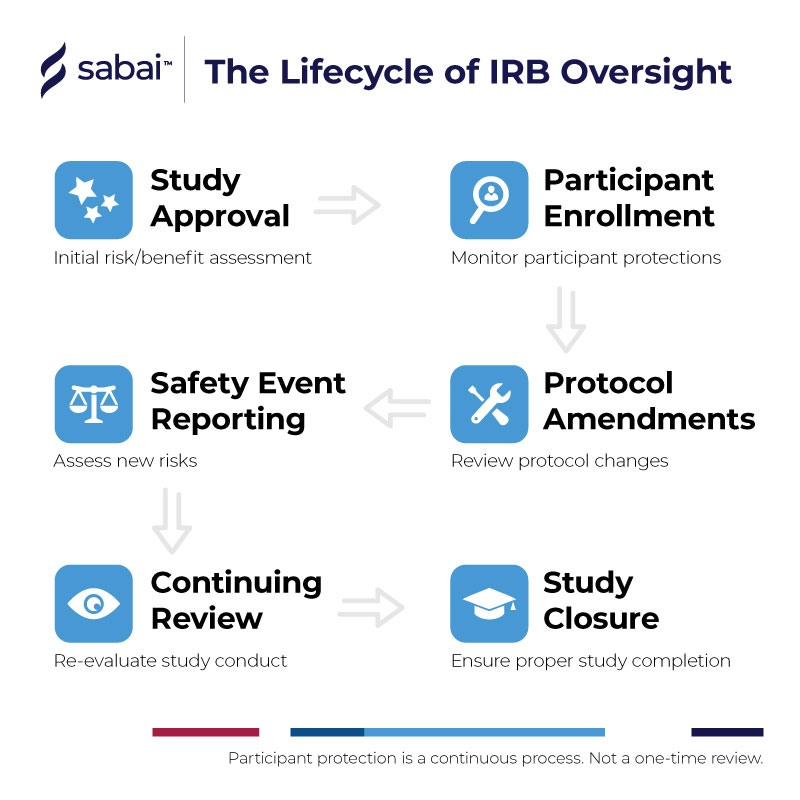
Every consent conversation, protocol amendment, adverse event report and continuing review plays a role in maintaining ethical oversight throughout the life of a study. Participant safety is not static and neither is the research environment surrounding it.
That is why post-approval oversight matters.
Like the famous chorus from The Police song “Every Breath You Take,” IRBs are continuously monitoring the study landscape to help ensure participants remain protected at every stage.
Approval is only the starting point
Initial IRB review determines whether a study is ethically and scientifically appropriate to begin. During this process, the IRB evaluates:
- Participant protections
- Informed consent materials
- Privacy and confidentiality safeguards
- Safety monitoring plans
- Regulatory compliance
But research rarely stays static after activation. Protocols evolve, enrollment challenges emerge and new safety information can shift the risk profile of a study over time. Without ongoing oversight, even a well-designed trial can gradually drift away from its original ethical framework. Post-approval monitoring exists to help prevent that drift.
Why continuing oversight matters
Clinical trials operate in dynamic, real-world environments where conditions can change quickly. Ongoing IRB oversight helps ensure studies continue meeting ethical and regulatory standards while adapting to those changes.
Continuing review allows IRBs to:
- Monitor emerging risks
- Evaluate protocol deviations
- Assess adverse events
- Confirm participants are receiving accurate, up-to-date information throughout the study
Participant safety cannot be evaluated once and assumed forever. Continuing oversight creates opportunities to identify concerns before they become larger problems.
The key components of post-approval oversight
Post-approval oversight involves several connected activities designed to maintain ethical compliance throughout the research lifecycle.
Continuing review
For studies requiring continuing review, investigators provide updated information about study progress, enrollment, safety events and operational changes. This gives the IRB an opportunity to reassess whether risks remain reasonable, whether additional protections are needed and whether participants should receive updated information.
Continuing review is not simply administrative paperwork. It is a real-world evaluation of how the study is actually being conducted.
Amendments and protocol changes
Research teams frequently need to modify protocols after activation. Common changes include:
- Updated eligibility criteria
- Revised study procedures
- New recruitment materials
- Adjustments to consent language
Even small changes can impact participant experience, risk or understanding. IRB review of amendments helps ensure those modifications are evaluated carefully before implementation.
Adverse event and safety reporting
Reviewing adverse events, unanticipated problems and new safety information is one of the most important aspects of post-approval oversight.
Safety reporting allows IRBs to identify emerging risks that may require:
- Updated consent forms
- Additional participant protections
- Protocol modifications
- Temporary enrollment pauses
Strong safety oversight is essential for maintaining participant trust and protecting study integrity.
Protocol deviations and noncompliance
Missed procedures, incorrect consent documentation or departures from approved activities may seem minor individually, but repeated or significant deviations can create serious ethical and regulatory concerns.
Post-approval oversight helps identify root causes, assess participant impact and determine whether corrective actions are needed. The goal is not punishment. It is maintaining accountability and participant protection.
The hidden risk of “set it and forget it” thinking
One of the biggest challenges in clinical research is the assumption that approval equals ongoing compliance.
In reality, studies require constant attention.
Research teams are often balancing enrollment pressures, sponsor timelines, staffing challenges and evolving operational demands. Without strong post-approval processes, important oversight responsibilities can unintentionally slip through the cracks.
Common issues can include expired approvals, delayed safety reporting, outdated consent forms or incomplete documentation. These gaps can place participants at risk and create significant regulatory consequences for sponsors and sites.
Consistent oversight helps organizations move from reactive problem-solving to proactive risk management.
Oversight supports more than compliance
IRB oversight is sometimes viewed narrowly as a regulatory requirement.
In reality, effective oversight strengthens the entire research ecosystem.
When studies maintain strong post-approval processes, organizations often experience:
- Stronger documentation practices
- Improved operational consistency
- Greater sponsor confidence
- Reduced compliance risk
Most importantly, ongoing oversight reinforces participant trust.
Participants agree to join clinical trials with the expectation that their rights, safety and wellbeing will remain protected throughout the study. Continuous review helps fulfill that responsibility.
Technology is changing post-approval oversight
As clinical trials become more decentralized and data-driven, post-approval oversight is also evolving.
Remote monitoring, electronic consent platforms and digital reporting systems have created new opportunities for faster communication and more efficient oversight.
At the same time, these advances introduce new challenges related to:
- Data privacy
- Cybersecurity
- Remote participant monitoring
- Cross-site coordination
- Real-time safety reporting
IRBs and research organizations must continue adapting oversight strategies to match the increasing complexity of modern clinical trials.
The core mission, however, remains unchanged: protecting participants.
Ethical research requires continuous attention
Participant protection is not confined to a single IRB meeting or approval letter.
It is an ongoing process that requires vigilance, communication and accountability throughout the entire research lifecycle.
That is why post-approval oversight matters.
Because ethical research is not just about getting a study approved.
It is about ensuring participants remain protected every step of the way.
Or, as the song reminds us:
“Every breath you take, every move you make… I’ll be watching you.”
In clinical research, that level of oversight is not intrusive. It is essential.